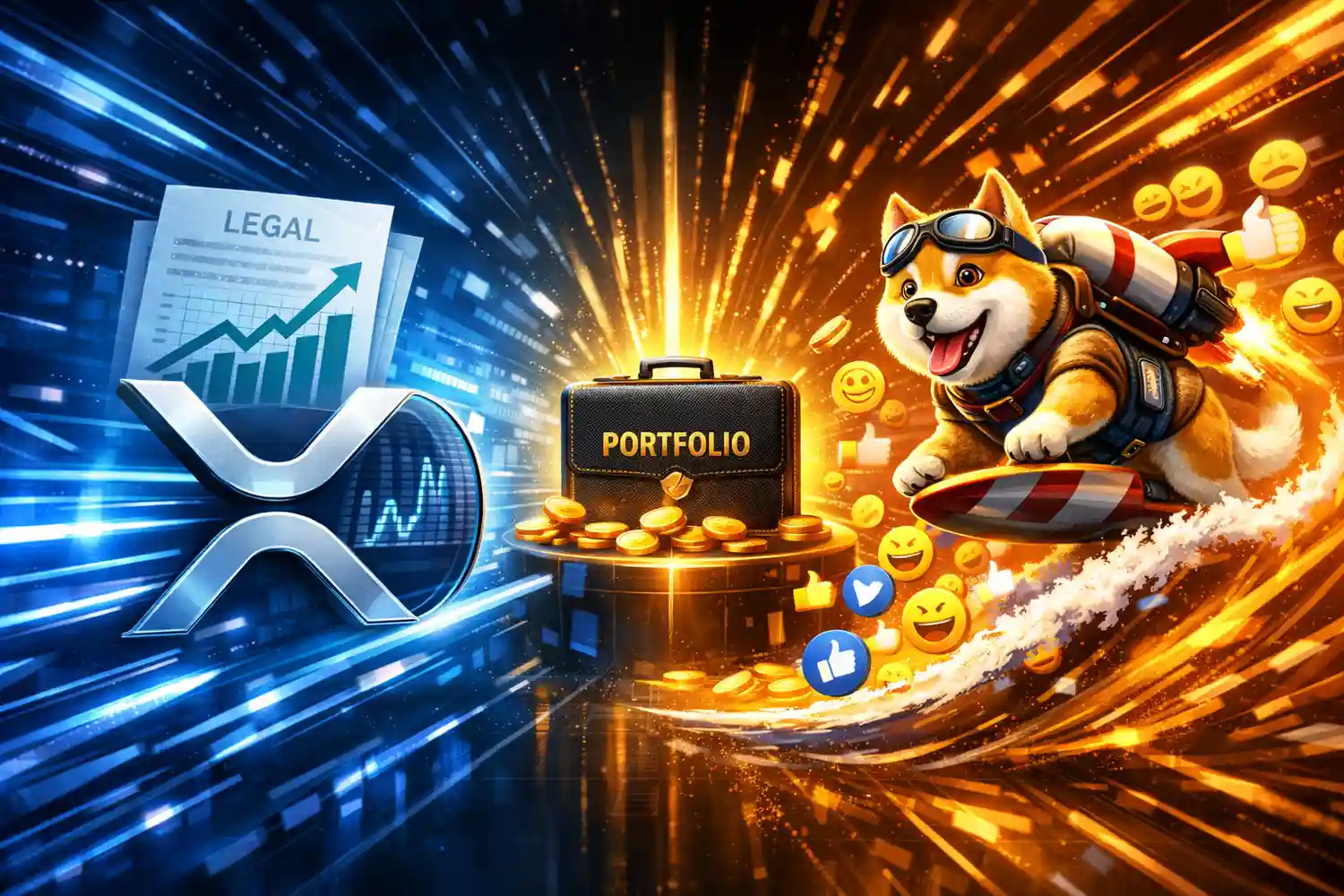
For investors navigating the turbulent crypto seas, the choice between XRP and Dogecoin hinges entirely on their risk appetite and investment philosophy. XRP, with its enterprise utility and ongoing regulatory saga, presents a calculated gamble on institutional adoption and legal clarity, potentially offering substantial upside if its challenges resolve favorably. Dogecoin, conversely, is a high-octane bet on viral cultural relevance and speculative momentum, promising explosive gains but carrying equally dramatic risks tied to community sentiment and influencer whims. Ultimately, one seeks foundational change; the other, cultural phenomenon – both offering unique, yet vastly different, paths on the risk/reward spectrum right now.
SEC Lawsuit Impact on XRP
No discussion of XRP’s risk and reward is complete without addressing the elephant in the room: the U.S. Securities and Exchange Commission (SEC) lawsuit against Ripple Labs. This legal battle has cast a long shadow over XRP, stifling its potential for widespread institutional adoption in the US and creating significant price volatility. While partial victories have offered glimmers of hope, the full resolution remains elusive. An unfavorable outcome could drastically impact XRP’s future, while a definitive win could unleash a torrent of pent-up demand and redefine its risk profile almost overnight. This single factor presents both XRP’s greatest immediate risk and its most significant potential catalyst.
Dogecoin’s Meme-Driven Valuation
Dogecoin’s meteoric rise defied traditional financial logic, establishing itself as the quintessential ‘meme coin.’ Its valuation isn’t primarily driven by technological innovation or enterprise utility, but by virality, community engagement, and cultural resonance. This makes DOGE incredibly susceptible to social media trends and influential endorsements, capable of parabolic pumps as well as sharp, sudden corrections. For the risk-tolerant investor, this speculative nature offers the allure of rapid returns, but it fundamentally lacks the underlying use-case stability that underpins more traditional assets, making it a high-stakes play on collective sentiment.
Utility vs. Speculation: The Core Divide
At their heart, XRP and Dogecoin represent two divergent philosophies in the crypto space. XRP was engineered by Ripple to facilitate fast, low-cost cross-border payments for financial institutions, aiming to solve a tangible real-world problem. Its value proposition is tied to adoption by banks and payment providers. Dogecoin, born as a joke, evolved into a community-powered digital currency, whose value largely stems from its status as a cultural phenomenon and a medium for small-value tipping. This fundamental difference means XRP’s long-term reward is tied to its functional success, while Dogecoin’s hinges on its enduring cultural relevance and speculative appeal.
Market Volatility: A Double-Edged Sword
Both XRP and Dogecoin operate within the notoriously volatile cryptocurrency market, yet their individual volatility drivers differ. XRP’s price movements are heavily influenced by regulatory news, major partnerships, and broader market sentiment regarding institutional crypto. Dogecoin, however, often exhibits more extreme, sentiment-driven swings, amplifying market trends and reacting sharply to celebrity tweets or viral social media campaigns. For those seeking explosive gains, Dogecoin’s volatility might be appealing, but it comes with a significantly higher risk of rapid losses. XRP’s volatility, while still substantial, tends to be more anchored to foundational developments.
Institutional Adoption Potential
XRP’s design explicitly targets the institutional finance sector, positioning it as a liquidity solution for cross-border transactions. Should the regulatory clouds clear, its existing relationships with financial partners and proven technology could unlock significant institutional adoption, driving demand and price appreciation. Dogecoin, conversely, has minimal institutional appeal. Its lack of enterprise utility and high speculative nature make it an unlikely candidate for serious institutional portfolios, which typically prioritize stability, regulatory compliance, and a clear return on investment thesis. This disparity is a key differentiator in their long-term growth trajectories.
The Elon Musk Effect on DOGE
No single individual has influenced Dogecoin’s trajectory more than Elon Musk. His frequent endorsements and playful tweets have repeatedly sent DOGE’s price soaring, demonstrating the immense power of influencer-driven market movements in the crypto world. While this offers exciting potential for rapid gains, it also introduces an extraordinary level of centralization risk. Dogecoin’s value can be profoundly swayed by a single individual’s whims, making it vulnerable to sentiment shifts and potentially unpredictable price action that has little to do with its underlying fundamentals. This is a unique risk-reward dynamic almost entirely absent in XRP’s profile.
XRP’s Cross-Border Payment Vision
Ripple’s vision for XRP is ambitious: to revolutionize global payments by offering a faster, cheaper, and more efficient alternative to traditional correspondent banking. XRP acts as a bridge currency, enabling instant settlement across different fiat currencies. If this vision materializes on a grand scale, the utility demand for XRP could be enormous, driving sustained value growth independent of speculative bubbles. This core use case provides a foundational long-term reward potential for XRP that is deeply rooted in solving a complex financial problem, contrasting sharply with Dogecoin’s more abstract value proposition.
Regulatory Landscape: A Defining Factor
The evolving global regulatory landscape is a critical factor for both assets, but it weighs most heavily on XRP. The outcome of the SEC lawsuit sets a precedent for how cryptocurrencies with a central issuing entity might be classified and regulated. Clear, favorable regulations would be a massive boon for XRP, de-risking it significantly. For Dogecoin, the regulatory concern is less about its classification (it’s generally viewed as a commodity due to its decentralized nature, albeit with a high concentration of holders) and more about broader market sentiment towards highly speculative assets. However, any crackdown on meme coins or influencer-led pumps could indirectly impact DOGE’s prospects.
Retail Sentiment and Community Power
Both XRP and Dogecoin command passionate retail investor bases, but their ‘community power’ manifests differently. XRP’s community often rallies around its technological potential and the fight against perceived regulatory overreach, exhibiting a strong belief in its enterprise future. Dogecoin’s strength lies in its meme culture and a highly engaged, often playful, online following that drives virality and adoption for fun and speculative gains. This difference influences their resilience during market downturns; XRP might lean on its fundamental use case, while Dogecoin relies more on maintaining its cultural momentum and collective enthusiasm to weather the storms.
Long-Term Growth Trajectories
When assessing long-term growth, the paths diverge significantly. XRP’s potential is tied to real-world adoption in global finance. If Ripple’s technology scales and regulatory issues are resolved, XRP could see steady, utility-driven growth. Dogecoin’s long-term trajectory is far less predictable, dependent on its ability to maintain meme relevance, avoid falling out of favor with key influencers, and potentially find new, sustainable use cases beyond pure speculation. Investors must weigh the potential for incremental, fundamental-driven growth versus the high-risk, high-reward bet on enduring cultural phenomena.