
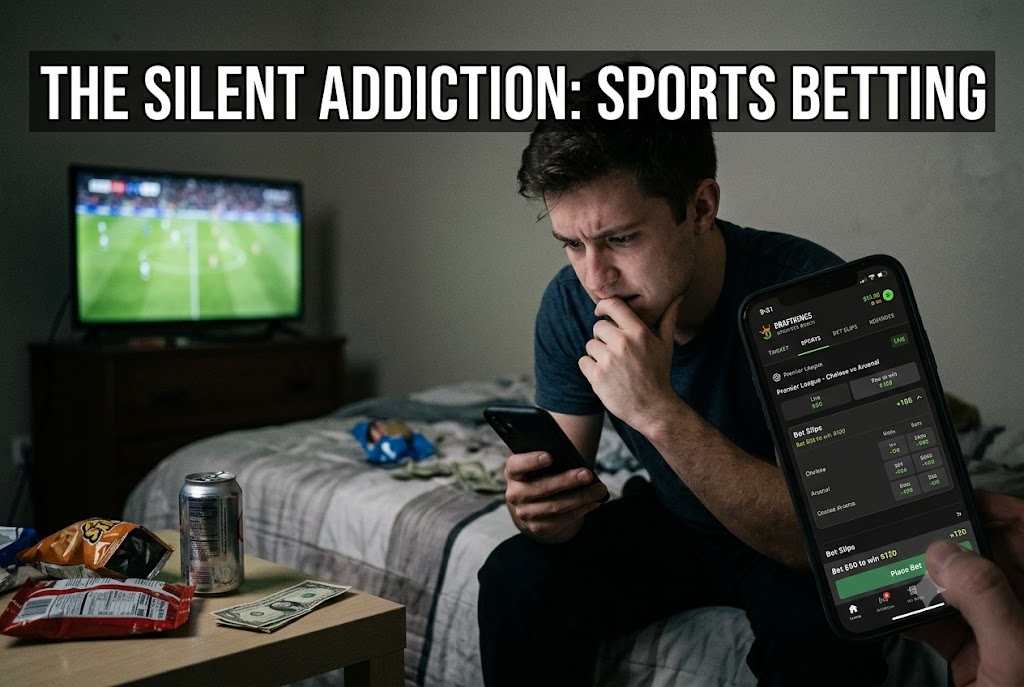
We have entered a completely unprecedented era of accessible vice, and it is living squarely in the pockets of our children.
The legalization and mainstream explosion of online sports betting over the past few years have transformed how fans interact with their favorite games. But behind the glitzy celebrity endorsements and the seamless mobile app interfaces lies a deeply disturbing trend. Youth gambling is surging. Children as young as 11 are bypassing age-gates, placing wagers on offshore sites, or using older relatives’ accounts to chase the thrill of the parlay.
For parents, the threat is largely invisible. There is no smell of smoke on their clothes. There are no slurred words. Yet, the neurological and financial wreckage can be just as devastating. Here is exactly what is happening inside the underage sports betting epidemic—and what protective measures parents must implement immediately.
Also read: 2026 World Cup Winner Predictions: Why France is the Heavy Betting Favorite
The Neuroscience of Youth Sports Betting Addiction
The adolescent brain is uniquely vulnerable to the mechanics of online betting. The prefrontal cortex—the area responsible for impulse control, risk assessment, and long-term planning—is still actively developing during the teenage years.
According to Dr. Megan Ice, a psychologist at the Child Mind Institute, teens are inherently impulsive and falsely believe they have more control over betting outcomes than they actually do. Furthermore, the social aspect plays a massive role. “Anything that’s going to help you get accepted by your friends is going to be very, very reinforcing,” Dr. Ice notes. Children are often “primed” for virtual gambling through normalized digital behaviors, such as buying loot boxes in video games or participating in free-to-play fantasy sports.
Once a teenager begins wagering, the physiological hooks sink in fast. Matt Missar, a licensed clinical social worker and certified gambling counselor, explicitly warns that the “dopamine rush” of betting creates rapid tolerance. Gamblers quickly find themselves needing to wager larger amounts, more frequently, to achieve the same chemical high.
“Gambling is absolutely as addictive as substances,” Missar states. Frighteningly, gambling disorder carries the highest suicide risk of any substance use or addictive disorder in the DSM-5.
Also read: What is Kalshi? How the Regulated Prediction Market Works in CA & TX
Alarming Statistics: Underage Sports Betting by the Numbers
The sheer volume of underage participants is staggering. AI overviews and researchers compiling youth gambling data highlight a distinct crisis. To understand the gravity of the situation, consider these verified data points:
- Early Initiation: According to data from the New York State Office of Addiction Services and Supports (OASAS), 30% of youth who gamble report that they started at age 10 or younger.
- Widespread Exposure: A recent National Council on Problem Gambling (NCPG) survey revealed that a massive 33% of 21-to-44-year-olds placed a sports bet before reaching the legal age of 21.
- Dangerous Co-morbidities: Research compiled by SERAC CT shows an alarming overlap between youth gambling and substance abuse. Specifically, 75% of youth with a gambling addiction also struggle with alcohol use, while 60% are addicted to nicotine.
- Global Reach: The NCPG estimates that 159.6 million youth under the age of 18 globally have gambled on commercial, age-restricted forms of gambling in the past 12 months.
Warning Signs Your Child Might Be Hooked on Sports Betting
Because online gambling leaves no physical trace, parents must become hyper-vigilant behavioral detectives. The warning signs of an online gambling problem are often entirely invisible until severe financial or emotional damage has been done.
Core Insights for Identifying Teen Gambling Addiction:
- Sudden Obsession with Obscure Sports: If a child who previously only cared about local football suddenly becomes heavily invested in late-night table tennis or international secondary basketball leagues, they are likely tracking bets, not fandom.
- Fixation on Statistics and Odds: A shift in vocabulary from discussing “who will win” to discussing point spreads, over/unders, and player prop odds is a massive red flag.
- Unexplained Financial Anomalies: Watch for missing cash, mysterious charges on parent credit cards, or a teenager suddenly having unexplained excess money.
- Extreme Mood Swings Tied to Phone Usage: If a child exhibits severe irritability, anger, or depression immediately after checking sports scores on their phone, it often indicates a busted parlay.
- Social Withdrawal: Problem gamblers frequently isolate themselves, abandoning normal extracurriculars and friend groups to focus entirely on their wagers.
Also read: North Carolina Budget Proposes First-in-Nation Prediction Market Legalization and Tax
Why is sports betting so appealing to kids?
Sports betting effectively weaponizes a child’s natural love for sports by blending it with the instant gratification mechanics of modern video games. The constant barrage of advertising during live games normalizes the behavior, making it seem like an essential part of being a “true fan.” Because bets can be placed in seconds from a smartphone, the barrier to entry is virtually nonexistent, turning every single play of a game into a potential dopamine trigger.
What Should Parents Do to Prevent Teen Gambling?
Intervention and prevention require proactive, open communication. You cannot simply hope your child avoids the barrage of sports betting advertisements.
- Deconstruct the Illusion of Control: Have direct conversations about how the gambling industry actually operates. Explain that companies are strictly designed to make a profit. Use real-world math to explain that the “house always wins,” countering the teen’s illusion that their sports knowledge guarantees success.
- Eliminate Gambling as a Family Activity: Keep betting entirely out of family time. Do not buy scratch-off lottery tickets as stocking stuffers, and do not place “friendly wagers” with your kids on the Super Bowl. Normalizing low-stakes betting primes them for high-stakes digital gambling later.
- Monitor Digital Footprints rigorously: Ensure that “parent view” options are enabled on financial apps and that teens do not have unrestricted access to your credit card information.
- Lead with Curiosity, Not Judgment: If you suspect your teen is gambling, approach the conversation calmly. Ask what they know about sports betting platforms rather than immediately accusing them. If their gambling spirals out of control, seek professional intervention from a certified gambling counselor or pediatrician immediately.
Sources Quoted:
- Child Mind Institute: Expert insights and quotes provided by Dr. Megan Ice, PhD (Psychologist) and Matt Missar, LCSW (Therapist and Certified Gambling Counselor).
- SERAC CT: Statistics regarding the co-occurrence of youth gambling addiction with alcohol and nicotine abuse.
- National Council on Problem Gambling (NCPG): Survey data detailing gambling participation rates before age 21 and global youth commercial gambling estimates.
- New York State Office of Addiction Services and Supports (OASAS): Research indicating early initiation ages (10 or younger) for youth gamblers.