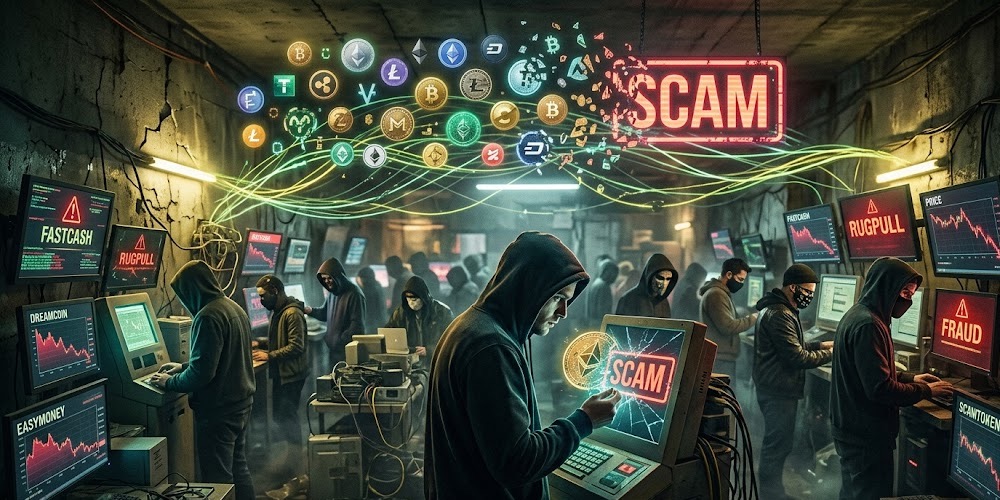
In a stunning revelation that has sent shockwaves through both the technology and financial sectors, Elon Musk has openly declared that he considers the vast majority of cryptocurrencies to be “scams.” The explosive comments were made under oath during a tense court hearing in Oakland, California, as part of the ongoing Musk v. Altman OpenAI trial. For a man whose tweets have historically moved billions of dollars in the digital asset space, this sweeping dismissal of the broader crypto ecosystem has sparked intense debate, accusations of hypocrisy, and a massive re-evaluation of market fundamentals by retail and institutional investors alike.
However, in true Musk fashion, the sweeping condemnation was accompanied by a subtle but vital caveat: some cryptocurrencies, he admitted, still hold significant merit. As the dust settles on this bombshell testimony, the market is left to untangle the paradox of a tech mogul who blasts the industry as fraudulent while simultaneously integrating digital asset trading tools into his massive social media empire, X (formerly Twitter).
In this comprehensive report, we will unpack the context of Musk’s testimony, analyze the specific digital assets he continues to endorse, explore the broader historical relationship between Musk and the crypto market, and examine what this means for the future of decentralized finance.
The Courtroom Bombshell: The OpenAI Trial Context
To understand the weight of Elon Musk’s statements, it is crucial to examine the setting in which they were made. The remarks did not originate from a late-night social media post or a casual podcast interview. They were delivered under oath during the high-stakes legal battle between Musk and Sam Altman regarding the founding principles, operational transparency, and financial maneuvers of OpenAI.
During the proceedings in Oakland, the legal teams delved into the historical financial strategies of OpenAI, specifically focusing on the company’s early days. The questioning naturally drifted toward the year 2018, a period when OpenAI was reportedly exploring alternative fundraising mechanisms, including the controversial concept of an Initial Coin Offering (ICO). At the time, ICOs were a massively popular—and largely unregulated—method for tech startups to raise capital by issuing their own proprietary digital tokens.
When asked to clarify his stance on digital assets in the context of OpenAI potentially issuing its own token back in 2018, Musk did not mince words. He stated unequivocally that while “some [cryptocurrencies] have value, most are just scams.”
This characterization of the broader cryptocurrency landscape as a hotbed for fraudulent projects is a stark assessment from one of the most influential figures in modern technology. It underscores Musk’s belief that the barrier to entry in the crypto space is fundamentally too low, allowing bad actors to capitalize on hype and retail investor naivety rather than delivering genuine technological innovation or utility.
“Most Are Scams, Some Have Merit”: Decoding the Musk Portfolio
While the headline-grabbing quote focuses on the word “scam,” the second half of Musk’s statement—that some digital assets have merit—is equally important. Financial analysts and crypto enthusiasts immediately began dissecting his words, looking for clues as to which specific assets the billionaire still views as legitimate.
The answer, as it turns out, lies directly in his known holdings and the public financial disclosures of his companies. Despite his harsh words for the thousands of alternative coins (altcoins) flooding the market, Musk’s portfolio reveals a highly concentrated, conservative approach to digital assets. He trusts only a select few: Bitcoin (BTC), Ethereum (ETH), and his long-time favorite, Dogecoin (DOGE).
Bitcoin: The Undisputed King of Digital Property
Musk’s acknowledgement of Bitcoin’s real value is consistent with the corporate treasury strategies of his flagship companies. Tesla famously became one of the first major publicly traded entities to add Bitcoin to its balance sheet, purchasing $1.5 billion worth of the asset in early 2021. Today, despite market fluctuations and historical sell-offs, Tesla still holds over 11,000 BTC, valued at approximately $886 million. Similarly, SpaceX holds around 8,285 BTC, valued at over $638 million. Musk recognizes Bitcoin not as a speculative toy, but as a decentralized digital property and a hedge against traditional financial systems.
Ethereum: The Settlement Layer
While Musk speaks less frequently about Ethereum than he does about Bitcoin or Dogecoin, its inclusion in the upper echelon of “meritorious” crypto assets speaks volumes. Ethereum acts as the foundational settlement layer for the entire on-chain economy, powering smart contracts, decentralized applications (dApps), and tokenized assets. Its survival through multiple crypto winters and regulatory crackdowns has solidified its position as a legitimate technological infrastructure, completely distinct from the “noise dressed as innovation” that Musk criticized during his testimony.
Dogecoin: The People’s Currency
The inclusion of Dogecoin is perhaps the most polarizing aspect of Musk’s digital asset philosophy. Originally created as a joke, Dogecoin gained unprecedented memetic gravity largely due to Musk’s relentless endorsement. He has frequently referred to it as “the people’s currency” and even integrated it into Tesla’s merchandise store. For Musk, Dogecoin’s merit doesn’t necessarily stem from complex smart contract capabilities, but from its cultural relevance, lighthearted community, and potential as a medium for micro-transactions.
By holding only these assets, Musk is playing a vastly different game than the average retail investor looking for a 100x return on a newly minted token. His strategy is predicated on staying power, liquidity, and resilience against regulatory earthquakes.
Hypocrisy or Evolution? The Community Backlash
Unsurprisingly, Musk’s testimony did not sit well with the broader cryptocurrency community, particularly those heavily invested in alternative tokens. Almost immediately following the reports from the Oakland courthouse, social media platforms erupted with accusations of extreme hypocrisy.
The primary source of the community’s frustration stems from Musk’s historical manipulation of the crypto market. Users were quick to point out that the self-proclaimed “Dogefather” had almost single-handedly pumped Dogecoin to an astronomical $90 billion market capitalization during the peak of the 2021 bull run. One prominent X user perfectly encapsulated the outrage, stating: “The man who pumped Dogecoin to a $90 billion market cap calling crypto scams. The audacity has no ceiling.”
Critics argue that Musk’s playful tweets, meme postings, and casual endorsements encouraged millions of inexperienced retail investors to pour their savings into highly volatile assets. When Tesla announced it would accept Bitcoin for vehicle purchases—only to reverse the decision months later citing the environmental impact of Bitcoin mining—it caused massive, chaotic price swings. To many, Musk is the ultimate embodiment of the erratic, unregulated nature of the very crypto market he is now condemning as fraudulent.
Is this a case of hypocrisy, or has Musk’s understanding of the space simply evolved? Defenders of the billionaire argue that his stance has actually been relatively consistent. He has always warned that investing in crypto is risky and that people should not bet their life savings on it. Furthermore, his distinction between fundamentally sound networks (like Bitcoin) and fly-by-night ICOs (which he labeled as scams) is a view shared by many veteran crypto analysts.
The X Factor: Condemning Crypto While Launching Financial Tools
Adding a massive layer of irony to the situation is the simultaneous business maneuver executed by Musk’s social media platform, X. On the very same day that reports surfaced of Musk bashing cryptocurrencies in court, the web version of X officially rolled out a highly anticipated feature: “Smart Cashtags” and a new crypto trading terminal interface.
This new financial integration allows users on X to seamlessly track real-time price data and interact with major financial assets directly from their feed. Tellingly, the initial rollout of these Smart Cashtags is explicitly tailored to the select few assets that Musk seemingly approves of. The supported cashtags include Bitcoin (BTC), Ethereum (ETH), XRP, Dogecoin (DOGE), and MicroStrategy (MSTR)—a stock heavily tied to Bitcoin performance.
This dual narrative is fascinating. On one hand, the CEO is under oath dismantling the credibility of the broader crypto ecosystem. On the other hand, his company is actively building the infrastructure to become a central hub for cryptocurrency tracking and trading. This move strongly aligns with Musk’s long-stated vision of transforming X into an “everything app,” akin to WeChat in China, where social media, news, and complex financial services are completely intertwined.
By filtering the supported assets on X’s new terminal, Musk is effectively acting as a gatekeeper. He is telling the market that while 90% of the industry might be a scam, the remaining 10% is valuable enough to be woven into the fabric of the global digital town square.
Market Reaction: Cautious Optimism Amidst the Noise
Historically, a negative comment about cryptocurrency from Elon Musk would have sent the market into a terrifying downward spiral. Yet, the reaction to his OpenAI trial testimony has been remarkably muted. Market prices remained incredibly stable in the immediate aftermath of the news breaking.
Bitcoin continued to edge steadily, hovering in the $77,000 range, largely ignoring the courtroom drama. Ethereum and Dogecoin also maintained their respective support levels. This lack of volatility suggests a maturing market. Investors are becoming increasingly desensitized to Musk’s rhetoric, focusing instead on broader macroeconomic indicators and institutional adoption.
According to recent analyses, the current crypto market sentiment is characterized by “cautious optimism.” While the market has seen minor fluctuations, the real drivers of price action are currently institutional hedging, changing inflation data, and climbing U.S. Treasury yields. With the 30-year Treasury yield hitting the 5% mark, traditional financial forces are playing a much heavier role in crypto valuation than billionaire soundbites.
Furthermore, the data shows an increasing focus on the tokenization of real-world assets (RWAs) and institutional accumulation via Exchange Traded Funds (ETFs). As traditional banking institutions like Visa quietly build stablecoin settlement plumbing into their mainstream payment networks, the industry is moving past the era where a single tweet or testimony can dictate the financial future of millions.
Lessons for the Retail Investor
If there is a core takeaway from Elon Musk’s sweeping declarations and his corresponding portfolio, it is a lesson in risk management and asset filtration. The cryptocurrency market currently features tens of thousands of active tokens. Statistical data continually shows that an overwhelming majority of these projects—upwards of 90%—will eventually fail, succumb to regulatory pressure, or be exposed as outright frauds.
Retail investors often fall into the trap of chasing the next massive multiplier, rotating their portfolios into the latest AI-crypto mashups, unregulated layer-2 networks, or obscure meme coins in the hopes of striking it rich. Musk’s testimony is a brutal reminder of the reality of this space: it operates highly similarly to a casino where the house usually wins.
By observing the wallet and corporate treasuries managed by one of the sharpest information edges on earth, the strategy becomes clear. The survivors of the crypto wars are those with undeniable staying power, robust networks, and immense liquidity. Whether one agrees with Musk’s ethics or his past market manipulation, his current thesis—that the vast majority of the market is noise dressed as innovation—is a sobering reality check for anyone investing in digital assets.
Conclusion: The Enduring Paradox of Elon Musk and Crypto
Elon Musk’s testimony during the OpenAI trial will undoubtedly be remembered as a significant cultural milestone in the history of cryptocurrency. By boldly stating under oath that “most cryptocurrencies are scams,” he has drawn a definitive line in the sand, separating the foundational pillars of the digital economy from the speculative excess that has long plagued the industry.
Yet, Musk remains a living paradox. He is a harsh critic who holds nearly a billion dollars in digital gold. He is the tech visionary who warns against crypto scams, while his own platform builds the very tools needed to trade them. He is the man who calls out market absurdity, yet remains the undisputed patron saint of Dogecoin.
As the cryptocurrency market continues to mature, moving away from hyper-volatile, influencer-driven cycles toward institutional stability and real-world utility, Musk’s words serve as both a historical footnote and a crucial warning. The future of decentralized finance will not be built on the thousands of scam tokens currently cluttering the blockchain, but rather on the select few assets that possess the ultimate crypto commodity: genuine, enduring merit.